


Module 2
The business model
Duration: 240 min
The strength of
Social Economic Marketing
When a consumer product has been produced and it leaves the factory, it has to be marketed to the consumers. There are various routes/methods to make products known and available to the consumer. This is called the “Route to Market”. There are different “routes” to market.
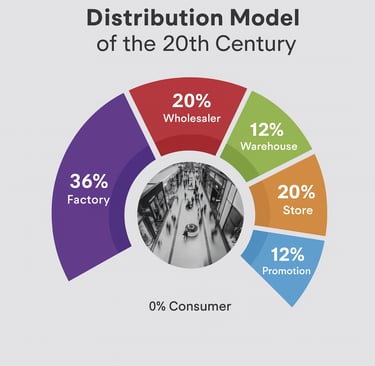
Traditionally products get sold from the factory to wholesalers, wholesalers to retailers and retailers sell to consumers. This involves substantial distribution, marketing, advertising and sales cost.
To cover these cost the products typically triples in price by the time it can be found in the store (retail). Meaning if a product leaves the factory for 10 euros, it sells for 30 euros in the retail store. This 20 euros (representing over 60% of the retail price) is needed to cover the “middlemen” (distribution channels and all marketing and sales expenses involved).
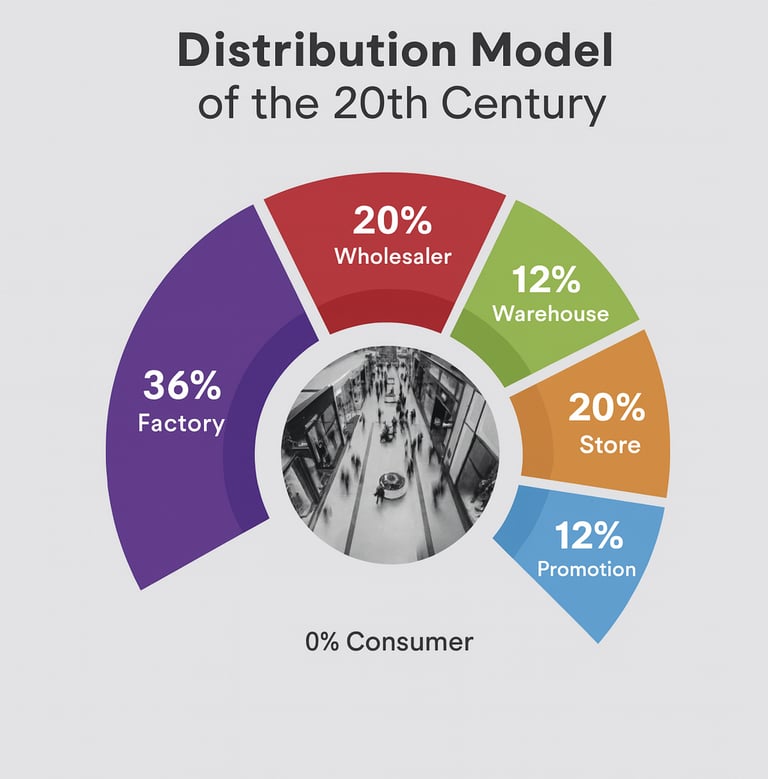
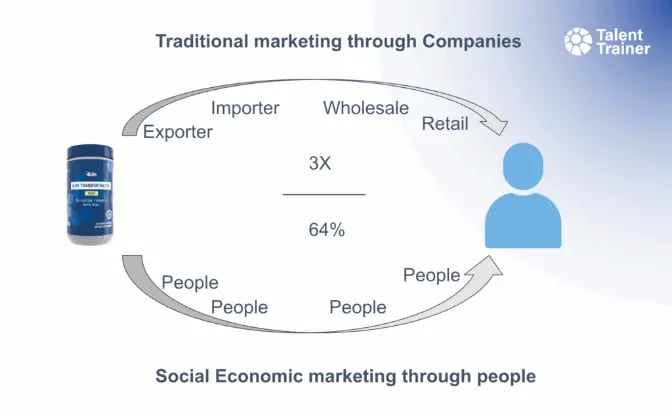
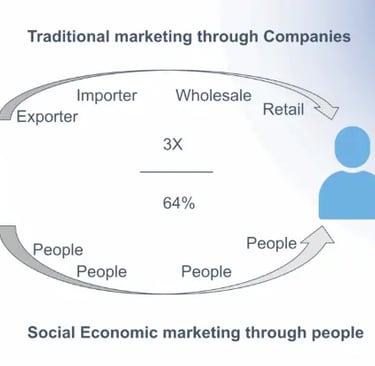
An other way to market a product is to give this 60% back to the consumers. This can be done by motivating happy consumers to refer others, by sharing their love for the product with others. Happy consumers can do this on the side, creating a side income, or it can be done professionally, creating your primary income.
Giving back this same 60% to the consumers that refer other consumers is called referral marketing or network marketing. A fantastic alternative, 21st century marketing method that motivates word-to-mouth advertising, the strongest advertising there is.
Empowering many individuals to earn this margin, instead of a few companies. A socially more responsible way to bring a product to market. Below you’ll find a spoken explanation why this marketing method, opposite to common thought, is the most honest method that exists:

Because this marketing method is much more fair than the traditional ways, it is socially far more responsible. Below you’ll find the many advantages this word-to-mouth marketing/sales has over the traditional marketing/sales. It makes you realize that it actually is socially irresponsible or “selfish” to market a good innovative product the old-fashioned way, via the retail chain.
Traditional marketing (20th century)
Traditional marketing (20th century)
60% goes to the middelmen, few big companies
benefits a few (topmanagers/companies)
pyramid structure. There is a top and bottom. Top typically earns more than the bottom
People lower in the company can not make more than people above them
If someone is good, they become a threat to the one ''above''
To increase your income, you often have to put your own interest first
Almost impossible to educate consumers well about the product. Via short commercials, typically less than a minute
Consumer pays always 100%. No choice
The product only serves one purpose: improving health
60% goes back to the consumers
benefits many (consumers)
Galaxy structure. A criss-cross network. There is no top nor bottom
Same earning potential for everyone
The better you make the other person, the more you benefit
To be successful, you have to put the other's intrest first
Consumers will be extremely well educated about the product. Extensive personal, interactive information and education
Consumer can discount their price if they choose to
The product can serve multiple purposses: improving health, finances, balancein live (freedom), self development, social contacts, happiness
It offers consumers from all backgrounds or education to create different types of income: Side income, Primary income or repetitive income (more passive) income
It can create more spare time and with that a better balance in life
It offers consumers from all backrounds or education an equal chance of self-development
It offers consumers from all backgrounds or education additional social development
It offers more flexibility in work location and times
It offers the opportunity to acquire coaching skills with which you can help other people achieve the above. A higher purpose.
Discover through the video library
These videos offer an introduction to the concepts of income building, entrepreneurship, and the structure behind 4Life’s business approach.